How a design system sped up feature delivery at Josh Talks
Why Josh Talks was shipping slowly and inconsistently, how we built an atomic design system to fix it, and what changed for design, development and users.

Purvang Mehta · Product designer
12 March 2024 · 1 min read
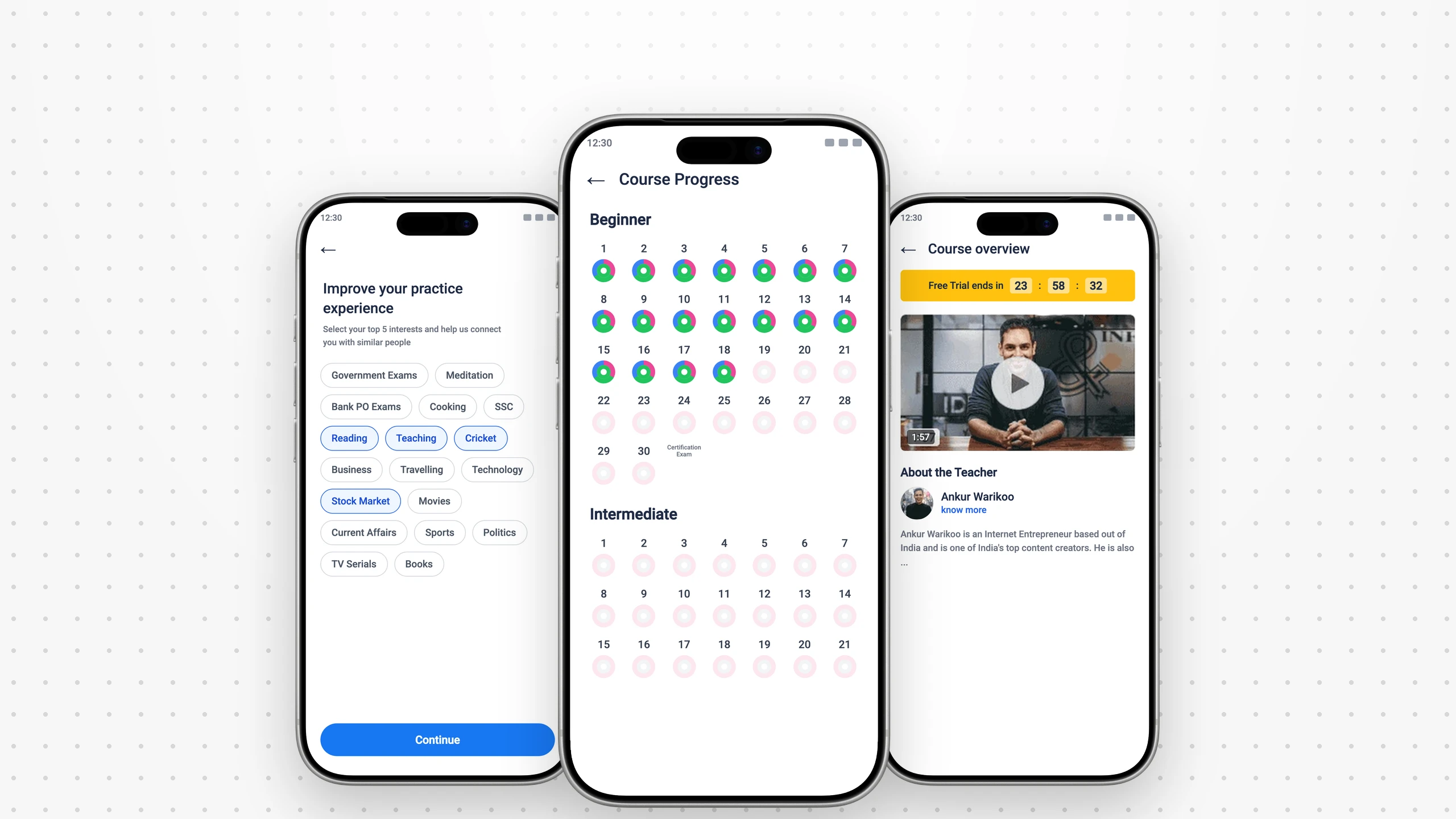
At Josh Talks, features took too long to ship, and the app felt different from screen to screen. I led the design team on a design system to fix both, working closely with the developers.
40%
faster developer turnaround
The problem
The way we designed slowed every release, and left the app inconsistent. That meant more drop-off, and a product slow to respond to users.
How we did it
- 01
Research
Feedback, analytics, and how other teams run their systems.
- 02
Ideas
Brainstorms, then sketches and wireframes stakeholders could react to.
- 03
Build in small steps
Colours, type and core components first. Then atomic design.
- 04
Prototype and test
Figma prototypes for stakeholders, then real participants.
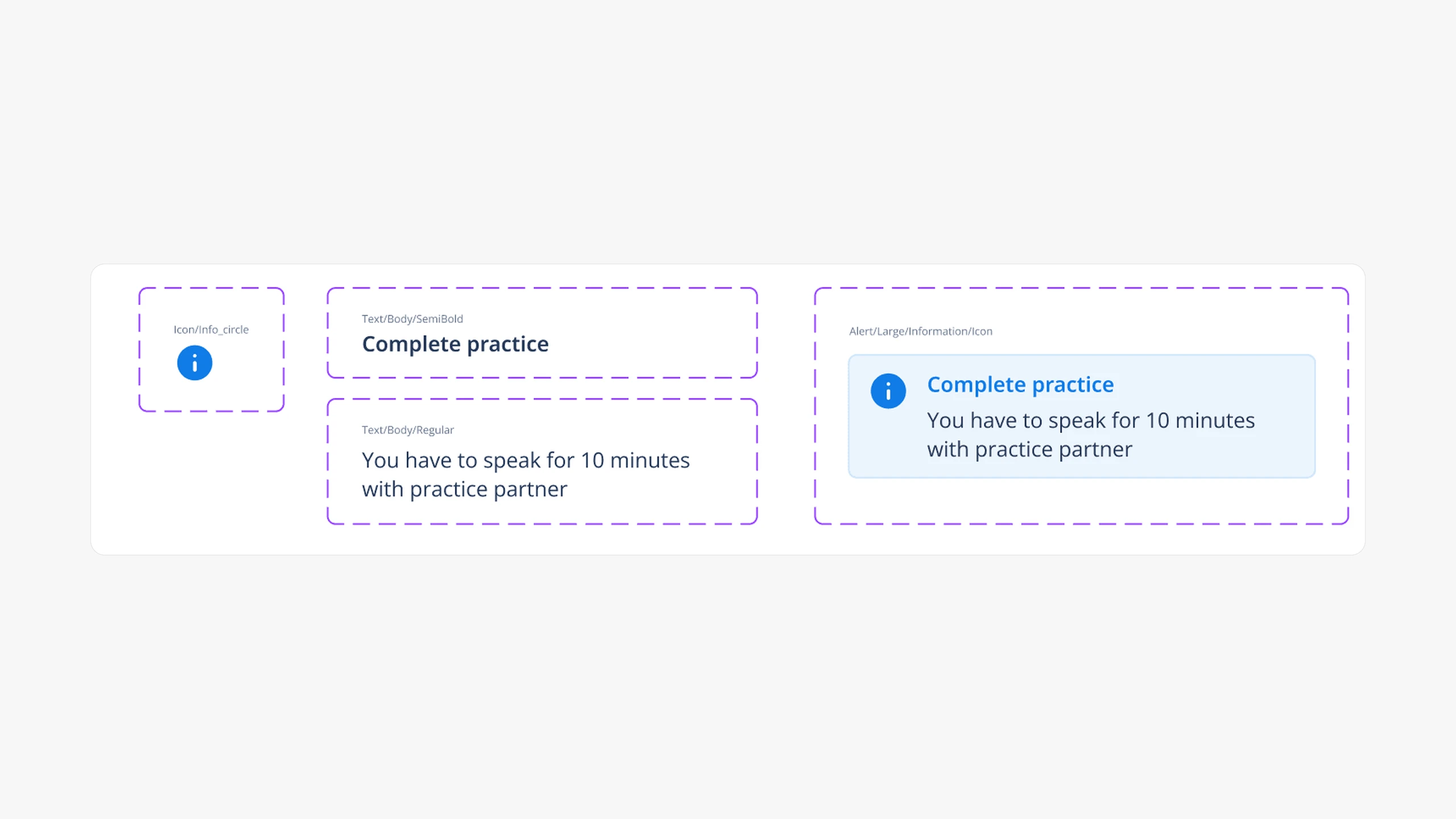
Atomic design breaks screens into small reusable pieces, and combines them into bigger ones:
What changed
Faster delivery
Screens came together from ready-made parts.
Better handoff
Design and development worked more closely.
A consistent app
Less drop-off, and happier users.
What I took from it
Collaboration and iteration mattered more than any single decision. A good design system changes the whole app, not just how fast design works.
First published on Medium in March 2024.